

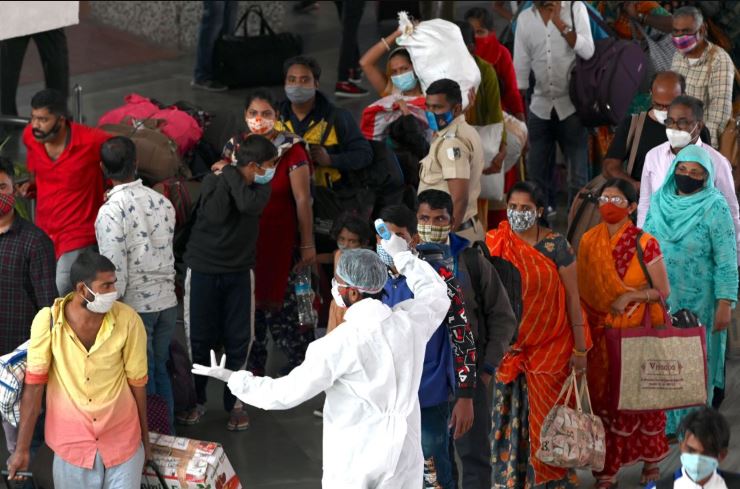
Following a surge in COVID-19 cases across Southeast Asia, India has also seen a surge in new COVID-19 cases in recent weeks, with the vast majority of cases occurring in India …
Amid a resurgence of infections in parts of Asia, including Hong Kong and Singapore, health officials are closely monitoring the rise in COVID-19 cases in several states as after Singapore-Hong Kong, now corona cases are increasing in India too. Cities like Mumbai, Chennai and Ahmedabad have also reported an increase in infection cases. According to the information, 12 new cases of COVID-19 have been reported in Tamil Nadu, while 12 new cases have been reported in Puducherry. The fever previously caused by influenza is now being linked to COVID-19. According to Karnataka Health Minister Dinesh Gundu Rao, 16 active cases of COVID-19 have been reported in Karnataka. In Gujarat, seven new cases have been reported in Ahmedabad in a single day.
Although the World Health Organization (WHO) announced the end of the pandemic in May 2023, COVID-19 is still spreading globally. Most of the cases in India are mild and only deaths from corona or admission to ICU are not related to new cases.
Health experts have advised people to be cautious, especially the elderly, pregnant women and people suffering from other health problems. But still people have many questions in their minds about what can be the risk of corona in India and how dangerous it is. So let us also know what the experts have to say about the risk of corona in India.
What is the situation in Mumbai?
The State Health Department (Maharashtra) says that there have been two deaths related to Covid-19 in Mumbai since January this year. These people had two or more diseases at the same time. One of the deceased had nephrotic syndrome with hypocalcemia attack, while the other was a cancer patient. The hospital administration clarified that these deaths were not due to Covid-19, but due to serious diseases like nephrotic syndrome with hypocalcemic attack and cancer. He said that there is no need for people to panic.
Dr Sandeep Budhiraja, Group Medical Director, Max Healthcare, says, ‘Covid-19 has never completely disappeared. It remains in an endemic form that occasionally causes local or regional outbreaks. The current surge in cases abroad is not necessarily due to a more dangerous strain, but is probably the result of waning immunity in the population, especially when regular vaccination has decreased. As immunity wanes over time, especially in vulnerable groups such as the elderly or people with co-morbidities, the virus gets an opportunity to spread. If infections increase, authorities should enforce public health measures such as wearing masks, washing hands regularly and maintaining physical distance.’
Dr Bharat Agarwal, Senior Consultant, General Medicine, Apollo Hospitals, Navi Mumbai, said, ‘People’s immunity against Covid-19 remains quite strong, credit for which goes to the immunity developed through vaccination and previous infections. New variants like JN.1 are considered to be very mild strains. Existing immunity, whether acquired through vaccine, natural or hybrid, is effective. There is currently no indication that additional or variant-specific booster doses are needed.’

